
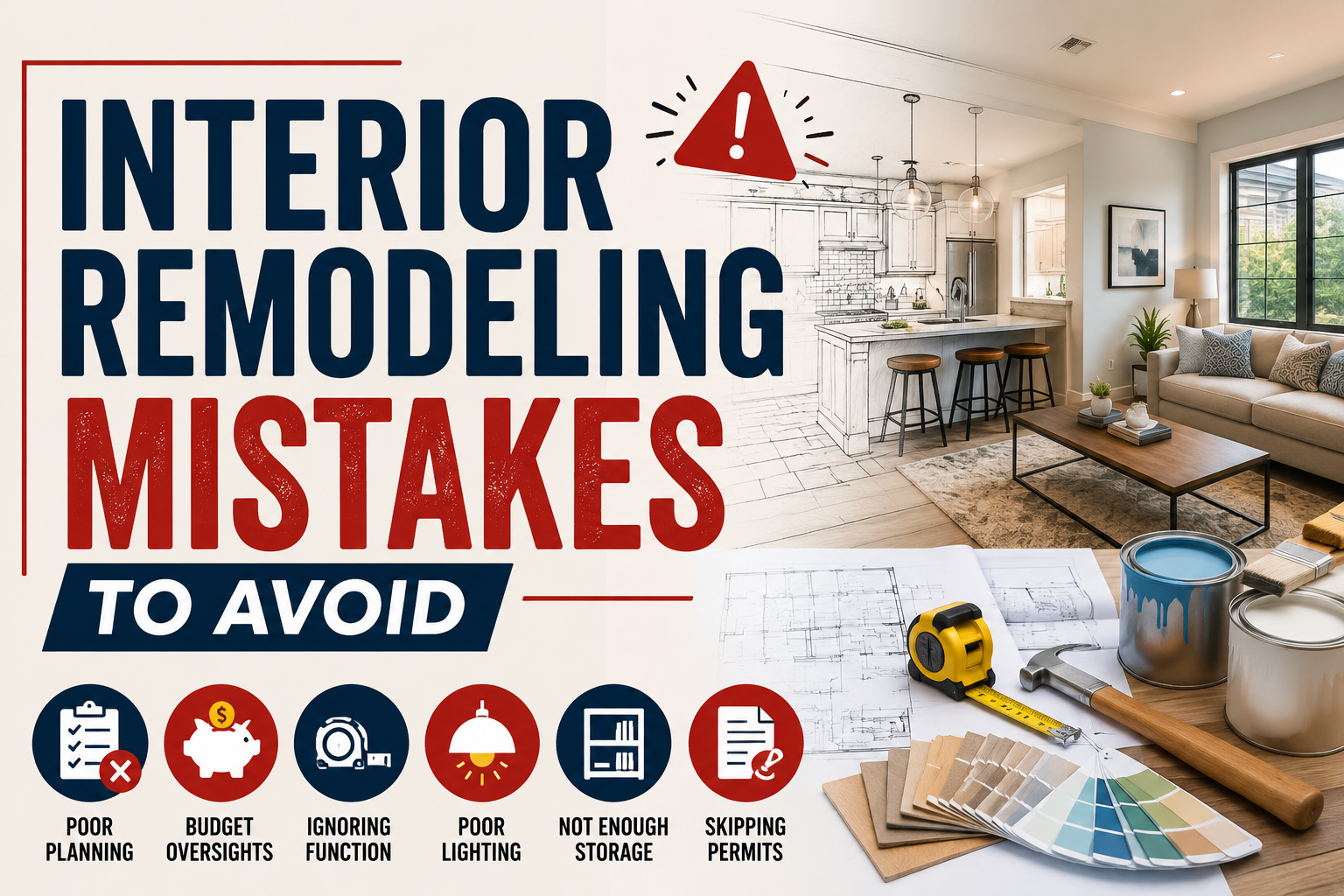
Interior remodeling can transform a home, improve functionality, and increase its overall appeal. Whether you’re renovating a single room or updating an entire house, careful planning can make the difference between a smooth project and an expensive, stressful experience.
Many remodeling problems don’t come from the renovation itself but from decisions made before or during construction. From underestimating costs to choosing materials based only on appearance, seemingly small mistakes can lead to delays, budget overruns, and disappointing results.
Here are some of the most common interior remodeling mistakes homeowners should avoid.
Starting Without a Clear Plan
One of the biggest remodeling mistakes is beginning construction before the project has been fully planned. Changing your mind after demolition or construction has started can quickly increase costs and extend the timeline.
Before work begins, establish what you want to change, how you want the finished space to function, and which elements are priorities. Consider the layout, materials, lighting, storage, finishes, and overall style.
A clear plan also makes it easier to communicate expectations with contractors and other professionals working on the project.
Setting an Unrealistic Budget
It’s easy to focus on the estimated construction cost and forget about the additional expenses that can appear during a remodel.
Unexpected plumbing problems, outdated electrical systems, damaged framing, material changes, permit requirements, and other discoveries can increase the final cost. Homeowners should build a contingency into the budget rather than planning to spend every dollar on the initial scope.
A realistic budget should account for labor, materials, permits, design services, disposal, and unexpected issues.
Choosing the Lowest Bid Automatically
Price matters, but the cheapest remodeling estimate isn’t always the best value.
A very low bid may reflect differences in materials, labor, project scope, insurance, experience, or assumptions about what is included. Comparing contractors based solely on price can make it difficult to understand why one proposal costs significantly less than another.
Instead, review what each estimate includes and ask questions about materials, labor, warranties, timelines, and potential additional costs.
Ignoring the Existing Layout
A beautiful design isn’t necessarily a practical one. Moving walls, plumbing, electrical systems, or major fixtures can significantly increase the complexity of a project.
Before changing the layout, consider whether the existing configuration can be improved with smaller adjustments. Sometimes relocating furniture, adding storage, improving lighting, or changing finishes can create a major improvement without extensive structural work.
When layout changes are necessary, understand the cost and technical implications before committing to them.
Prioritizing Appearance Over Function
A remodel should look good, but it also needs to work well for the people living in the home.
For example, a kitchen may have beautiful cabinets but insufficient storage. A bathroom may look stylish but lack practical counter space. A living room may have attractive furniture but poor circulation.
Think about how you use the space every day. Storage, accessibility, lighting, outlets, workflow, and maintenance should be considered alongside color schemes and finishes.
Choosing Trends Over Timeless Design
Interior trends can be appealing, but remodeling around a trend that quickly becomes outdated may not provide the long-term value you expect.
This doesn’t mean your home needs to look traditional or boring. Instead, consider using timeless materials and layouts for major elements while incorporating trends through paint, décor, lighting, hardware, or other features that are easier to replace.
A balanced approach can help your remodel feel current without requiring another major renovation in a few years.
Buying Materials Too Early
Ordering materials before measurements and specifications are finalized can create unnecessary problems.
Cabinets, countertops, flooring, appliances, doors, and other components may depend on precise dimensions. If measurements change, materials may no longer fit or may need to be reordered.
Lead times can also vary significantly. Work with your contractor or designer to determine when materials should be ordered and verify dimensions before placing major orders.
Forgetting About Lighting
Lighting is often treated as an afterthought, even though it can dramatically affect how a remodeled space looks and functions.
A well-designed room may need a combination of ambient, task, and accent lighting. Natural light should also be considered when planning the layout.
Think about where people will work, read, cook, relax, or move through the space. Plan outlet and switch locations before walls are closed so electrical changes don’t become expensive later.
Not Planning Enough Storage
Remodeling creates an opportunity to solve storage problems, but homeowners sometimes focus so heavily on aesthetics that storage gets overlooked.
Consider where everyday items will be stored and whether the new layout provides convenient access. Built-in cabinets, closets, shelving, drawers, and multifunctional furniture can help make a space more functional.
Good storage planning can also make a beautifully remodeled room easier to keep organized.
Ignoring Ventilation and Moisture
Bathrooms, kitchens, laundry areas, and other moisture-prone spaces need appropriate ventilation.
Poor ventilation can contribute to excessive humidity, condensation, odors, and moisture-related problems. During a remodel, make sure ventilation is considered rather than simply focusing on finishes.
If you are changing a kitchen or bathroom significantly, discuss ventilation requirements with the appropriate contractor or professional.
Failing to Consider Energy Efficiency
A remodel can be a good opportunity to improve energy performance. Depending on the scope of the project, this might include upgrading insulation, windows, lighting, appliances, or HVAC equipment.
Energy-efficient improvements may increase upfront costs but can potentially reduce operating expenses over time.
Consider which upgrades make sense for your home rather than adding expensive features simply because they are marketed as energy efficient.
Skipping Necessary Permits
Some remodeling projects require permits, inspections, or approvals. Requirements vary depending on the location and scope of work.
Skipping required permits can create problems when selling the property, refinancing, obtaining insurance, or completing future renovations.
Before starting work, determine which permits and inspections apply to your project. Your contractor or local building department can help clarify the requirements.
Changing the Scope Mid-Project
Adding new ideas after construction begins can have a major impact on cost and schedule.
For example, a homeowner may decide to move an electrical outlet, change flooring, add built-in shelving, or modify a wall after work is already underway. Each change can affect labor, materials, sequencing, and other parts of the project.
Some changes are unavoidable, especially when hidden problems are discovered. However, making design decisions before construction begins can help minimize costly changes.
Not Communicating With Your Contractor
Good communication is essential during a remodeling project. Homeowners should know who to contact with questions, how decisions will be documented, and how changes will be approved.
Don’t assume that a contractor, designer, and homeowner all have the same understanding of a detail. Written specifications, drawings, material selections, and change orders can help reduce misunderstandings.
Regular project updates can also help you identify problems before they become more difficult to correct.
Choosing Materials Only by Price
Cheap materials aren’t always a bargain, particularly for high-use areas.
Flooring, countertops, cabinetry, plumbing fixtures, hardware, and other finishes experience different levels of wear. Consider durability, maintenance, warranty, appearance, and expected lifespan alongside the purchase price.
At the same time, expensive doesn’t automatically mean better. Choose materials based on how they will actually be used in your home.
Forgetting About Maintenance
A remodeled space should be attractive and practical to maintain.
Some finishes show fingerprints easily, certain flooring materials require specialized care, and intricate designs can create additional cleaning challenges. Before choosing a material, understand how it needs to be maintained.
Considering maintenance during the design stage can help ensure that the finished space remains enjoyable long after construction ends.
Focusing Only on the Finished Look
It’s natural to concentrate on paint colors, countertops, flooring, fixtures, and other visible elements. However, many of the most important parts of a remodel are hidden behind walls.
Electrical wiring, plumbing, insulation, ventilation, structural components, and moisture protection can all affect the long-term performance of your home.
When the opportunity arises during a remodel, prioritize critical infrastructure rather than spending the entire budget on cosmetic upgrades.
Final Thoughts
Interior remodeling can be an exciting way to improve your home’s appearance, comfort, and functionality, but successful results depend heavily on preparation.
Avoiding common mistakes such as poor budgeting, inadequate planning, ignoring storage, overlooking lighting, choosing materials solely by price, and making frequent changes during construction can help keep your project on track.
Before work begins, establish a realistic budget, define your priorities, communicate clearly with your remodeling team, and consider how the space will function for years to come. A thoughtful approach can help turn your remodeling plans into a finished space that looks great and works well for everyday life.
Frequently Asked Questions
What is the biggest mistake to avoid when remodeling a home?
Poor planning is one of the most common and costly remodeling mistakes. Making important decisions before construction begins can reduce delays, unexpected expenses, and changes during the project.
How much extra should I budget for a remodel?
The appropriate contingency depends on the size and complexity of the project and the condition of the home. Discuss potential risks with your contractor and keep a reserve for unexpected issues rather than allocating your entire budget to planned work.
Should I remodel one room at a time?
It depends on your budget, goals, and how the remodeling work connects between rooms. Remodeling multiple connected spaces at once may be more efficient in some situations, while phased renovations can make it easier to manage costs and disruption.
Should I choose trendy materials for my remodel?
Trendy materials can work well as accents, but major permanent elements may benefit from more timeless choices. This can make it easier to update the appearance of the space later without another major renovation.
Do I need permits for interior remodeling?
Some interior remodeling projects require permits, particularly when they involve structural changes, electrical work, plumbing, or other regulated modifications. Requirements vary by location and project scope, so check local requirements before starting.
How can I avoid remodeling delays?
Plan the project carefully, finalize major design decisions early, order materials with appropriate lead times, communicate regularly with your contractor, and avoid unnecessary changes after construction begins.
Should I hire a professional for an interior remodel?
For complex renovations involving structural changes, electrical systems, plumbing, or extensive design work, professional assistance can help manage technical requirements and reduce mistakes. The right professionals depend on the scope of your project.
What should I prioritize when remodeling?
Prioritize structural integrity, electrical and plumbing systems, ventilation, layout, functionality, storage, and other elements that are difficult or expensive to change later. Cosmetic finishes can then be selected around those priorities.