
Why Renovation Timelines Matter More Than You Think
One of the most common questions homeowners ask before starting a renovation is simple:
How long is this going to take? And it’s a fair question.
Renovating your home isn’t just about cost — it’s about time, planning, and how much disruption you’re willing to handle in your daily life.
The truth is, timelines can vary depending on the scope of work, but understanding the process helps you set realistic expectations and avoid unnecessary stress.
Average Home Renovation Timeline
While every project is different, most renovations follow a general timeline:
- Small projects (bathroom, minor upgrades): 2–4 weeks
- Medium projects (kitchen remodel): 4–8 weeks
- Full home renovations: 3–6 months
Larger or custom projects can take longer depending on complexity.
What Affects Renovation Time?
Not all projects move at the same speed. Several factors influence how long your renovation will take.
Project Size and Complexity
A simple bathroom update is very different from a full structural renovation. The more moving parts involved, the longer the timeline.
Material Availability
Delays in materials — especially custom items — can slow down progress significantly.
Permits and Approvals
Depending on your location, permits can take days or even weeks to get approved.
Contractor Scheduling
A well-planned project with an experienced contractor moves much faster than one without clear coordination.
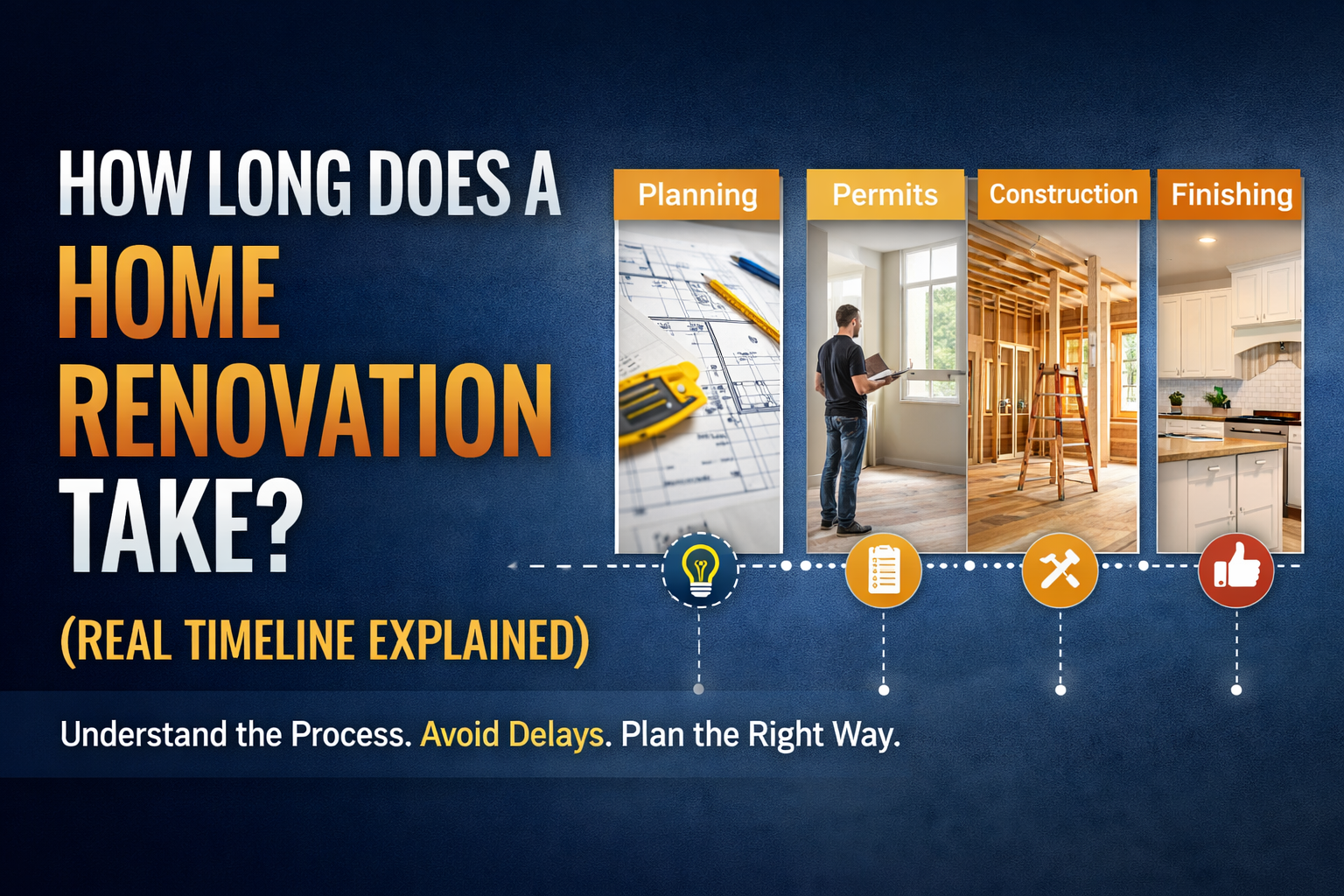
Step-by-Step Renovation Timeline
Understanding the phases of renovation can give you a clearer picture of what to expect.
1. Planning and Design (1–3 weeks)
This includes:
- Initial consultation
- Budget planning
- Design selection
2. Permits and Preparation (1–2 weeks)
- Securing approvals
- Ordering materials
- Scheduling work
3. Construction Phase (2–12 weeks)
This is where the actual work happens:
- Demolition
- Structural work
- Installation
4. Finishing and Final Touches (1–2 weeks)
- Painting
- Fixtures
- Clean-up and inspection
Common Delays (And How to Avoid Them)
Even well-planned projects can face delays.
Some of the most common issues include:
- Material shortages
- Design changes mid-project
- Unexpected structural issues
- Weather conditions
The best way to avoid delays is proper planning and working with experienced professionals.
How to Speed Up Your Renovation
While some factors are out of your control, there are ways to keep your project on track:
- Finalize design decisions early
- Choose readily available materials
- Work with a reliable contractor
- Set clear expectations from the start
Final Thoughts
A home renovation is a major investment — not just financially, but in time and energy.
While timelines can vary, having a clear understanding of the process helps you plan better and avoid surprises.
At the end of the day, the goal isn’t just to finish quickly — it’s to get the job done right.