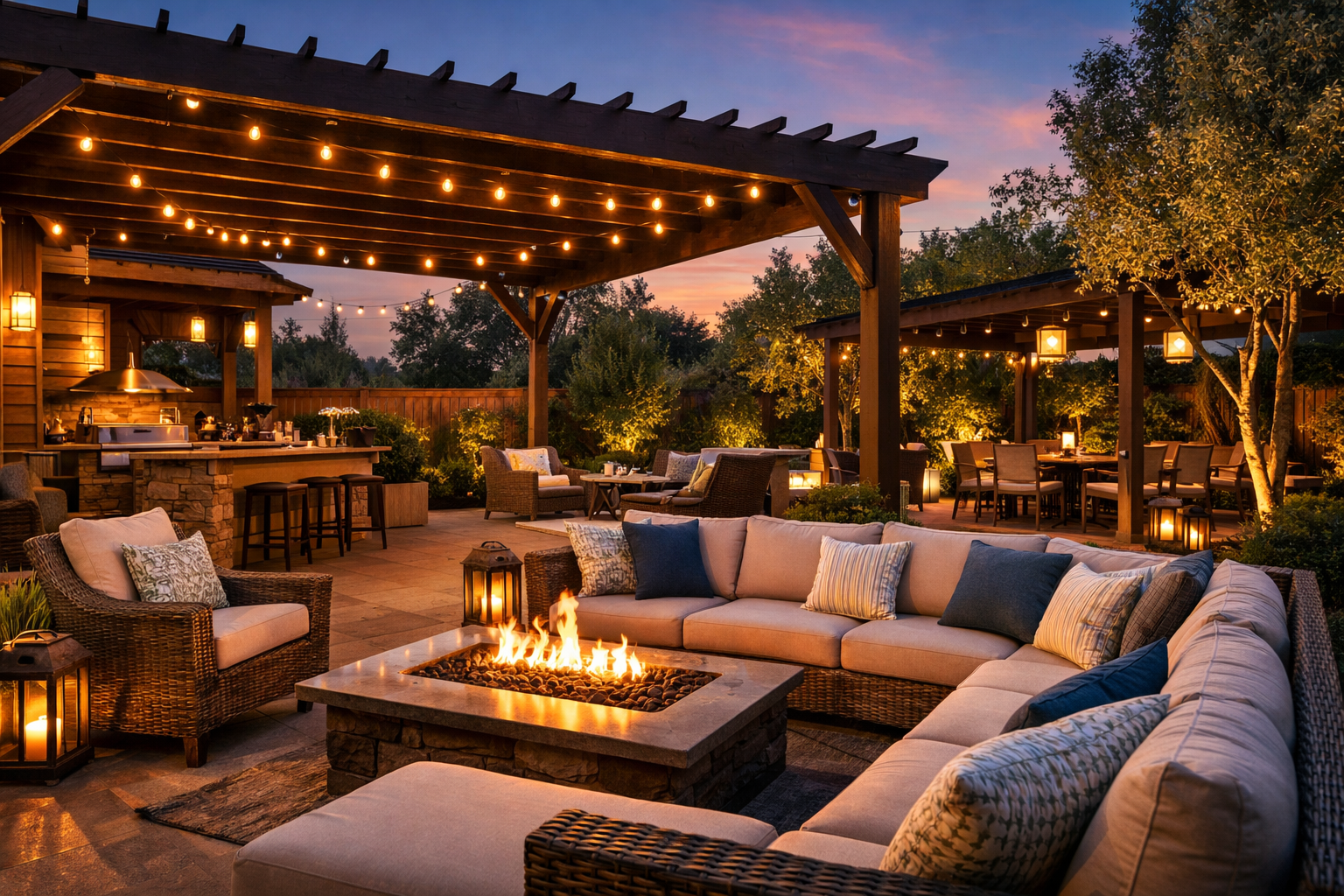
Creating an outdoor living space is one of the best ways to extend your home beyond its walls. A thoughtfully designed backyard can become a place to relax, entertain guests, and enjoy nature without leaving your property. Whether you want a cozy patio for family dinners or a full outdoor kitchen for hosting gatherings, planning is the key to building a functional and beautiful outdoor space.
This guide will walk you through everything you need to consider before designing your perfect outdoor living area.
1. Define the Purpose of Your Outdoor Space
Before choosing materials or furniture, decide how you plan to use the space.
Common outdoor living goals include:
- Relaxation areas – Comfortable seating, hammocks, or lounge chairs
- Entertainment spaces – Outdoor dining tables, fire pits, and bars
- Outdoor kitchens – Grills, prep counters, and storage
- Family gathering spaces – Multi-functional patios with seating and play areas
Ask yourself these questions:
- Will you host large gatherings or small family dinners?
- Do you want a cooking area outdoors?
- Should the space be usable year-round?
Knowing the purpose helps determine the layout and features.
2. Choose the Right Location in Your Backyard
Not every area of your yard is ideal for an outdoor living setup. Location impacts comfort, privacy, and usability.
Important factors to consider:
Sun Exposure
- Full sun areas are great for pools and sunbathing
- Partial shade is better for seating areas
Privacy
You may want to add:
- Fencing
- Privacy screens
- Landscaping
- Pergolas
Accessibility
Outdoor spaces should connect easily to your home, especially if you plan to cook or entertain frequently.
3. Select the Best Patio or Flooring Material
Your flooring choice forms the foundation of the entire outdoor space. The right material should balance durability, style, and maintenance.
Concrete
- Affordable and durable
- Can be stamped or colored
- Low maintenance
Pavers
- Classic and stylish appearance
- Easy to repair or replace
- Good drainage
Natural Stone
- Premium look
- Extremely durable
- Higher installation cost
Stamped concrete patios have become very popular because they mimic stone or brick while remaining budget-friendly.
4. Create Functional Zones
Just like indoor spaces, outdoor areas work best when divided into specific zones.
Common outdoor zones include:
Lounge Area
Comfortable seating with sofas or chairs for relaxation.
Dining Area
A table and chairs for meals, often placed close to the house.
Cooking Area
Outdoor kitchen setups can include:
- Built-in grills
- Prep counters
- Storage cabinets
- Mini refrigerators
Fire Pit Area
Fire pits create a cozy gathering spot and extend usability during cooler evenings.
Separating zones helps maintain a clean and organized layout.
5. Add Shade and Weather Protection
Weather conditions can quickly make an outdoor space uncomfortable. Adding shade structures improves usability.
Popular options include:
Pergolas
Stylish structures that provide partial shade and architectural interest.
Covered Patios
Permanent roofs that protect against rain and sun.
Retractable Awnings
Flexible shade solutions that can be opened or closed as needed.
Umbrellas
Affordable and portable shade options for seating areas.
Combining multiple shade elements can create a comfortable environment throughout the day.
6. Use Lighting to Enhance the Atmosphere
Outdoor lighting is often overlooked, but it dramatically improves both aesthetics and safety.
Types of outdoor lighting:
- String lights for a cozy atmosphere
- Pathway lights for safe navigation
- Wall sconces near doors and seating areas
- Landscape lighting to highlight plants and features
Warm lighting tones usually create the most inviting environment.
7. Choose Durable Outdoor Furniture
Outdoor furniture must withstand sun, rain, and temperature changes.
Look for materials such as:
- Aluminum
- Teak wood
- Wicker with weather-resistant frames
- Powder-coated steel
Weather-resistant cushions and fabrics also help maintain comfort and longevity.
8. Incorporate Landscaping for a Natural Feel
Plants and greenery can transform a simple patio into a relaxing retreat.
Ideas include:
- Raised planters
- Flower beds around the patio
- Vertical gardens
- Decorative shrubs for privacy
Landscaping softens hard surfaces and blends your outdoor living space with the surrounding environment.
9. Add Features That Increase Comfort
A few extra features can elevate your outdoor space dramatically.
Popular additions include:
- Fire pits or fireplaces
- Outdoor TVs
- Water features
- Built-in seating
- Outdoor heaters
These elements make the space enjoyable in different seasons.
10. Plan Your Budget Before Starting
Outdoor projects can vary widely in cost depending on materials and features.
Typical cost factors include:
- Patio size and materials
- Lighting installation
- Outdoor kitchen appliances
- Landscaping
- Custom structures like pergolas
Working with experienced contractors can help you design a space that fits your budget while still achieving your goals.
Final Thoughts
An outdoor living space can completely transform how you use your home. With the right planning, your backyard can become a beautiful extension of your indoor living area.
By defining your goals, selecting durable materials, and creating functional zones, you can design an outdoor space that is perfect for relaxing evenings, family gatherings, and entertaining guests.
Whether you want a simple patio or a full outdoor entertainment area, thoughtful planning ensures your investment adds both comfort and value to your home.